Splitters
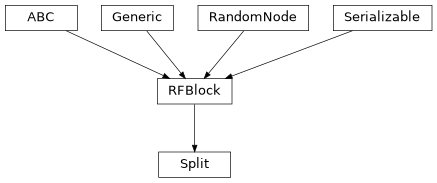
Radio-Frequency (RF) splitters divide an input signal into multiple output signals, typically with equal amplitude and phase characteristics. They are commonly used in communication systems to distribute signals to multiple paths. In the process, they may introduce insertion loss, phase imbalance, and crosstalk between output ports.
This module provides various numerical models of RF splitters.
- class Split(num_outputs, seed=None)[source]
Bases:
RFBlockA simple radio-frequency block that splits the input signal into multiple outputs.
- Parameters:
- realize(bandwidth, oversampling_factor, carrier_frequency)[source]
Return the current state of the radio-frequency block.
- Parameters:
- Return type:
- Returns:
Current state of the radio-frequency block.
- property i: RFBlockPort[Split][source]
Splitter input port.
- property num_input_ports: int[source]
Number of physical ports feeding into this radio-frequency block.
If the returned number is negative, the block can accept an arbitrary number of input ports.
- property num_output_ports: int[source]
Number of physical ports emerging from this radio-frequency block.
- property o: RFBlockPort[Split][source]
Splitter output ports.
Number of ports is equal to the number of outputs specified during initialization.